
Interested in stockpiling but not sure? In this post I share 6 common excuses for not stockpiling and why you still should anyway, even with a busy life or tight budget.
We all know that having a stockpile of food and household essentials is important. It saves time, money, and stress, and helps you feel prepared for whatever the future brings. But even knowing all that, stockpiling can still feel overwhelming—and if you’re like me, you’ve probably come up with some solid excuses for why it’s just not happening right now.
In today’s post, I’m breaking down six common excuses not to stockpile and sharing why you should go ahead and start anyway. These are all excuses I’ve told myself at one point or another, so if they sound familiar, you’re not alone!
Let’s jump right in.
Prefer video? Watch me explaining all 6 common excuses not to stockpile here.
1. “I Don’t Have the Space”
This is probably the number one excuse that comes to mind when we think about stockpiling. If you’ve ever watched a YouTube video where someone shows off a giant, beautifully organized pantry or basement filled with shelves of food, it’s easy to feel like stockpiling is just not realistic.
But here’s the thing: stockpiling doesn’t mean prepping for the end of the world. It doesn’t have to be a bunker or a whole room dedicated to food storage. It’s simply about buying a little extra of the things your family uses most so that you always have extra on hand.
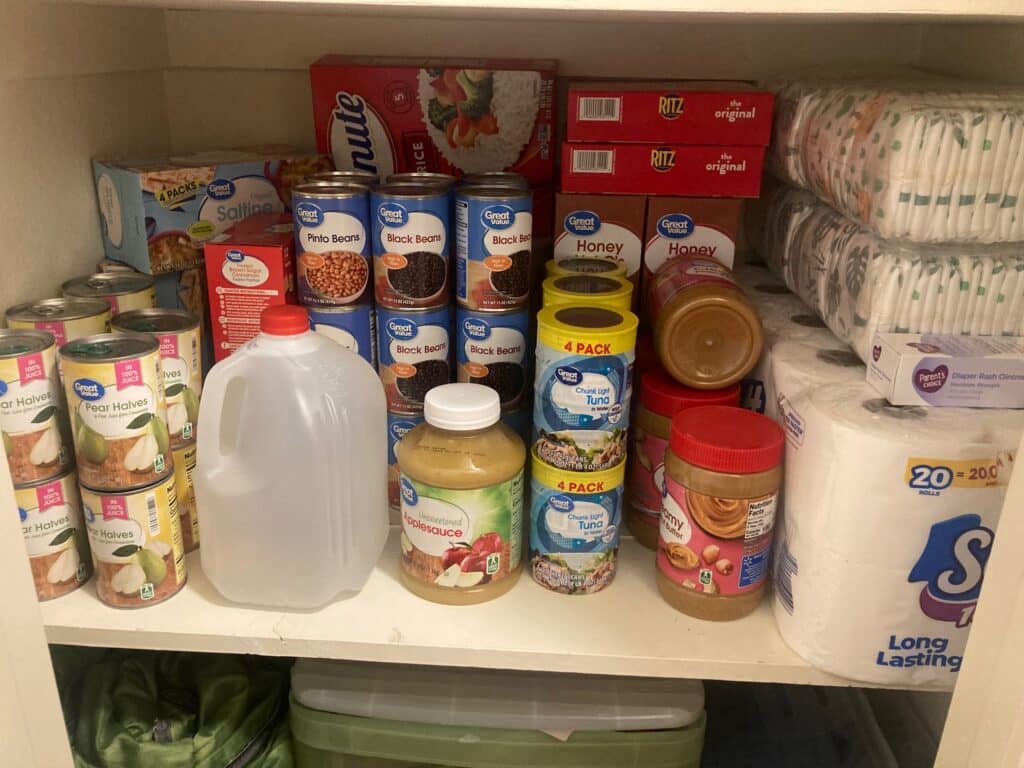
Even in a small space, you can make it work. Get creative—use under-the-bed storage, over-the-door organizers, high closet shelves, or even those awkward kitchen cabinets that are hard to reach. For example, I cleared a shelf in our linen closet, and it’s been a great spot for overflow food storage.
2. “My Family Is Too Big”
I completely understand this one. With a family of seven, it can feel like anything I stockpile disappears in a week. But honestly, that’s exactly why it’s important to stockpile.
When I first started building up a stockpile – specifically with power outages in mind – I found that we went through it fast. I’ve had to work at replenishing it as we use things, and I don’t always keep it as full as I’d like. But even a small stockpile helps me feel more prepared.
My goal is simple: when I use something from the stockpile, I try to remember to add it to my list so I can replace it. That way I’m slowly building up a stash of essentials that helps take the pressure off during busy weeks or unexpected events.
3. “I’m on a Tight Budget”
This excuse hits close to home for me. I work with a weekly grocery budget, and sometimes I wonder if I can even afford to stockpile. But stockpiling doesn’t have to be expensive.
The key is to do it slowly—just a little at a time. Maybe it’s an extra $5 a week. Maybe when you buy peanut butter, you grab one extra jar for the pantry. You don’t need a huge shopping trip or a big haul at Costco.
The best way to build your stockpile on a budget is to shop sales. If pasta is on sale, grab five extra boxes instead of one. That way, when you need pasta next month, you won’t have to pay full price. Over time, this actually helps lower your grocery bill.
4. “I’ll Just Waste Food”
Wasting food is a real concern. Back in 2020, we stocked up on rice and beans like everyone else – and while we used the black beans, some of that rice sat around too long and ended up going to waste.
The mistake? We don’t normally eat rice on a super regular basis.
That’s why I always recommend starting with what you already use. Stockpile the foods your family eats regularly—whether that’s pasta, peanut butter, canned tomatoes, or snack bars for the kids. Once you have a good system for rotating those items, then you can consider adding long-term emergency food.
For now, keep it simple and focus on what you know you’ll actually eat.
5. “I’m Not an Organized Person”
You do not have to be ultra-organized to stockpile. Some people have all the bins and labels and matching containers—and that’s awesome—but it’s not required.
One simple tip that has helped me? Keep a Sharpie nearby. When you add something to your stockpile, write the date on it. That way, you know how long it’s been sitting there and can make sure to use it before it goes stale.
I had some saltines that got forgotten about and ended up stale, and it would’ve been so easy to avoid if I had just labeled them. So now, when I add something new, I quickly jot the date down. It’s super fast to do but it definitely helps later!
And remember, you don’t have to have it all figured out before you start. Just begin. You’ll learn what works for you as you go.
6. “I Don’t Even Know Where to Start”
If this is you, don’t stress! Start by looking at your grocery list. What are the items you buy week after week?
Focus on shelf-stable basics first—things like pasta, canned tomatoes, peanut butter, canned meats, or whatever your family eats regularly. Make a list of 8–10 of those items and just start with those. You don’t need to buy 20 different things all at once. Start with a few essentials and build from there.
And remember, your stockpile doesn’t have to be limited to food. You can also stock up on water, diapers, wipes, medicine, or anything else your family relies on.
Start Small, Stay Consistent
Stockpiling doesn’t need to be overwhelming or complicated. It’s not about preparing for doomsday—it’s about preparing for everyday life. Whether it’s a week when you couldn’t make it to the store, or your kids come down sick, having a few extra items on hand can make life so much easier.
Start small. Start with what you know your family uses. And most importantly—start. Your future self will thank you.
Let me know in the comments—what’s one item you’re planning to stock up on this week?
If you want more ideas, I have another post all about my no-power stockpile that I created last fall. It’s a small one, but it might give you a helpful starting point!

Leave a Reply